1. The Opening Trumpet Blast
If America had a Google review right now, it might read something like:
⭐☆☆☆☆ “Divided. Would not recommend. Service is terrible, everyone is yelling, and the house special is chaos.”
We laugh, but deep down we know it’s true. Families are split. Communities are suspicious of each other. The political climate is more toxic than a Florida swamp in August. And sadly, the church — the very Body of Christ that should be the world’s beacon of light — often mirrors this division instead of healing it.
Jesus warned us about this very thing. “Every kingdom divided against itself will be ruined, and every household divided against itself will not stand” (Matthew 12:25). That wasn’t just a history lesson for first-century Israel; it’s a flashing red warning sign for twenty-first-century America. We are living in the very reality He described: divided houses, unraveling kingdoms, and the slow decay that follows when pride takes the wheel.
Yet into this darkness, there is still hope. There is always hope. Because Jesus didn’t stop at the warning; He gave us a solution — a blueprint for unity. The night before His death, He prayed in John 17:21, “that they may all be one… so that the world may believe that you have sent me.”
Think about that: the credibility of the gospel itself is tied to the visible unity of His people. If we stay fractured, the world won’t believe. If we unite, the world will see and know. Unity isn’t a side project of Christianity. It’s the proof that we are who we say we are.
But here’s the catch: unity is not cheap. It’s not kumbaya campfire songs or watered-down compromise. True unity is costly. It’s sealed in repentance, baptism, and the Cross. It requires us to die to our pride, confront our divisions, and choose reconciliation over rivalry.
And the timing could not be more urgent. In less than two weeks, we enter a new biblical year — 5786. The shofar will sound at sundown in Jerusalem on September 22, 2025, marking Rosh Hashanah, the Feast of Trumpets. Around the world, believers are preparing their hearts through the 22-Day Unity Challenge, walking backward through the Hebrew alphabet to clear the temple of our hearts. On that final day, we will gather — both in homes and online — for a Global Unity Call, blowing the horn before closing the biblical year.
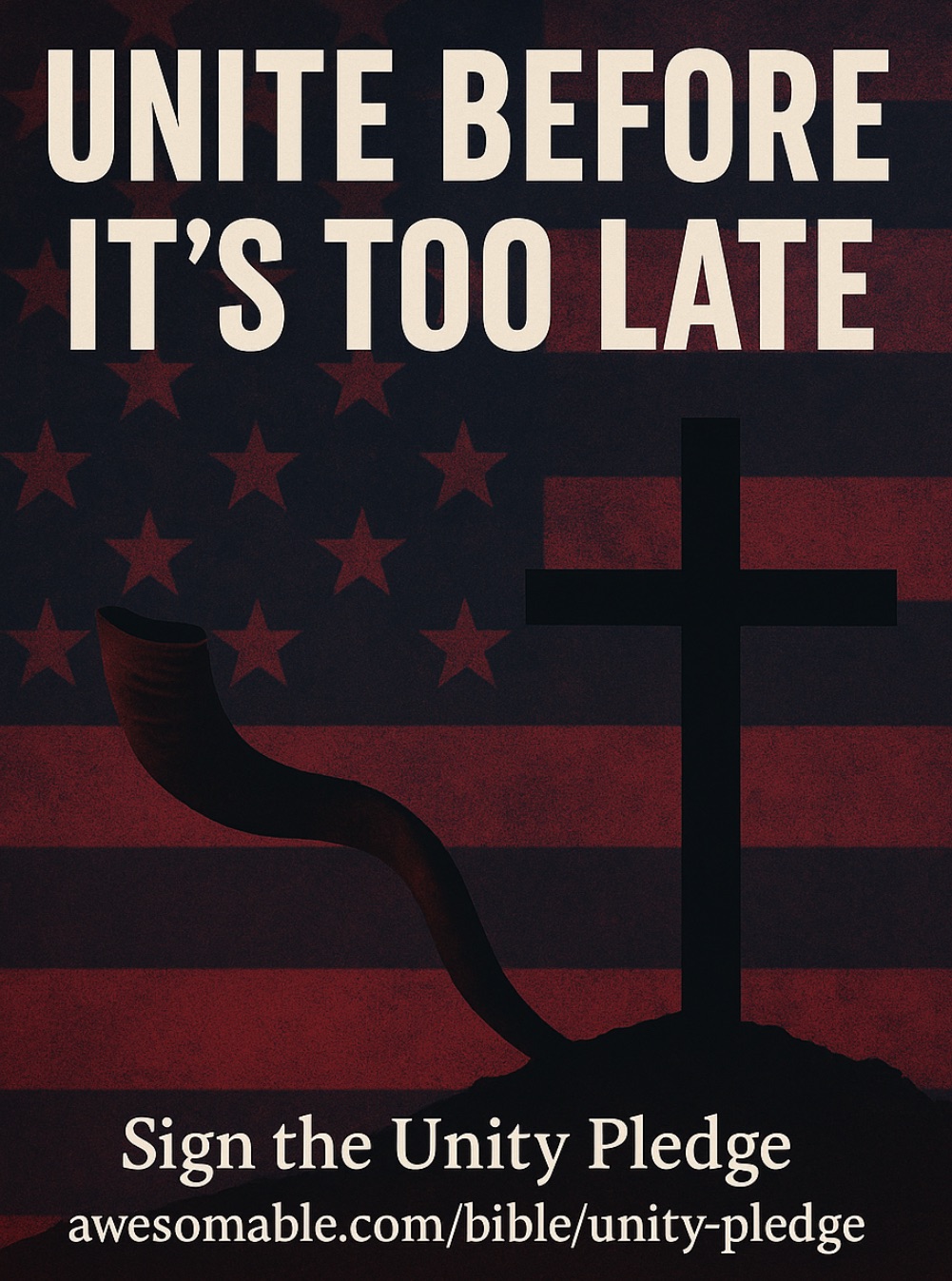
This is more than a calendar page turning. It’s a divine appointment. Heaven is issuing a summons: Unite before it’s too late.
2. The Martyrs’ Cry
There are moments in history when the ground itself seems to shake under the weight of loss. September 10, 2025, was one of those moments. News broke that Charlie Kirk — founder of Turning Point USA, a bold conservative voice, and a believer who was still growing daily in faith and courage — had been shot dead at a public event.
Charlie wasn’t the first martyr for truth, nor will he be the last. But his death was unique because the whole world heard it. It wasn’t just a headline; it was a trumpet blast. Suddenly, millions of people who never considered the cost of conviction had to reckon with it.
In Revelation 6:10, the martyrs under the altar cry out, “How long, Sovereign Lord, holy and true, until you judge the inhabitants of the earth and avenge our blood?” Their voices are not whispers of bitterness. They are alarms — piercing, echoing through the centuries, demanding that the church wake up.
Charlie’s death, like Stephen’s in Acts 7 or Dietrich Bonhoeffer’s under the Nazis, is not just a tragedy. It’s a summons. The blood of the martyrs cries out — not for vengeance but for unity. Their lives say to us: Stop wasting time. Stop quarreling over labels, traditions, or petty differences. Stop tearing down what Christ bled to build up.
Here’s the thing about martyrs: they don’t give us the luxury of apathy. You can ignore your alarm clock (hit snooze, roll over, pretend it’s Saturday). But you cannot snooze the trumpet blast of the martyrs. Their sacrifice demands a response.
And let’s be honest, that’s uncomfortable. Unity is messy. It requires humility. It forces us to swallow pride, admit mistakes, and reconcile with people we’d rather avoid. If martyrdom confronts us with the cost of following Jesus, then unity confronts us with the cost of living like Him. Both are hard. Both are holy.
But this is where humor sneaks in to save us from despair. Because if God can use twelve ordinary, stubborn disciples — fishermen, tax collectors, zealots who probably would’ve voted for different political parties if they lived today — to turn the world upside down, He can surely handle our mess. Our divisions aren’t bigger than His power. Our arguments aren’t louder than His Spirit.
So here we are: America unraveling, the church fractured, the world confused. And heaven asking one simple question: Will you honor the martyrs’ cry by choosing costly unity?
The answer begins with repentance. And repentance is where fasting, prayer, and covenant action take us next.
3. The Prophetic Calendar: Elul, Teshuvah, and the Missing Connection
God has always kept time differently than we do. While we’re glued to our Google Calendars and iPhone reminders, He’s working on rhythms that go back to creation itself. One of those rhythms is the month of Elul — the final month of the biblical calendar, a season of repentance and preparation before the new year begins at Rosh Hashanah, the Feast of Trumpets.
Elul is sometimes called the month of the King. It’s the picture of a king leaving his palace to walk among his people in the fields, approachable and near. It’s an invitation to prepare our hearts before the King returns to His throne. How do we prepare? Through Teshuvah — a Hebrew word meaning repentance, or literally “to return.”
That’s why we launched the 22-Day Unity Challenge, a journey counting backward through the Hebrew alphabet. Each letter acts like a chisel, carving away pride, bitterness, and fear until our hearts are ready for God’s Spirit to unite us. On September 22, 2025, at sundown in Jerusalem, the trumpet will sound. The biblical year will turn. And we’ll either be ready or distracted.
This year isn’t just any year. It’s 5786 — and that last digit, the number six, is loaded with meaning. In Hebrew, the number six corresponds to the letter Vav (ו), which literally means hook or nail. Think of it as God’s tent peg. It’s what holds the tabernacle together, what fastens one piece to another, what joins heaven to earth.
Here’s the catch: Vav is what we’ve been missing. America has passion, freedom, and strength — but no connection. The church has zeal, truth, and structure — but too often no unity. We’ve had the parts, but not the hook to bind them. Without Vav, without connection, we fall apart.
But 5786 is the year God says: It’s time to fasten what has been torn. Time to nail together what has been broken. Time to connect heaven and earth, brother to brother, church to church.
If you’re wondering how practical that can get, here’s a modern analogy: Vav is God’s duct tape. Not the cheap kind you buy at a dollar store, but the heavy-duty roll that can patch a cracked bucket, fix a broken chair, and hold a bumper on a truck until it makes it home. In other words: connection is the difference between collapse and survival.
So as Elul draws to a close, we don’t just mark time. We step into prophetic timing. This is the year of connection. This is the year to restore the missing six. And the way we do that is by preparing through fasting, prayer, and covenant action — together.
4. Yod and the Invisible Hand of God
If you’ve ever opened a Hebrew Bible, you’ll see God’s covenant Name written with four letters: Yod-Heh-Vav-Heh (יהוה). These are small, simple letters — yet they hold the weight of eternity. Together they whisper what God said to Moses at the burning bush: “I AM WHO I AM” (Exodus 3:14).
And here’s the wonder: each of those letters tells us something about how God unites heaven and earth, and how He calls us to mirror that unity.
Yod (י) is the smallest letter, like a tiny flame or spark. It represents God’s invisible hand — unseen, but holding all things together. Every other letter of the Hebrew alphabet contains a Yod in some form, which means God’s hand is woven into every word, every story, every life. Heh (ה) is breath. It’s the exhale of creation, the Spirit that brings life. Twice it appears in God’s Name, reminding us that His unity isn’t just structural but living, moving, breathing through His Spirit. Vav (ו) is the hook or nail — the connection point, the fastener. It joins heaven and earth, God and man, brother to brother. Without Vav, everything falls apart. With Vav, everything holds together. Together, YHWH shows us that unity is God’s identity: unseen power, living breath, divine connection.
📖 Reflections here: 22-Day Unity Challenge
This is why the 22-Day Unity Challenge matters so much. We’re not just walking through letters like they’re trivia on flashcards. We are preparing our hearts to encounter the God whose very Name is unity. Yod calls us to humility. Heh calls us to breathe His Spirit. Vav calls us to connect what has been torn. And the final Heh calls us to let His breath flow through us again and again.
Here’s the practical side: Unity doesn’t start with political agreements, denominational handshakes, or even family reconciliations. Unity starts when we acknowledge God’s invisible hand is at work, His Spirit is breathing life, and His hook is fastening us together.
Or to put it with a smile: if Yod is God’s invisible hand, then Heh is His breath, Vav is His duct tape, and the second Heh is the reminder that we’re going to need a second roll. Because unity takes work, and sometimes the first patch job doesn’t hold.
Unite before it’s too late.
We’ve been given His Name, not as a theological puzzle but as a prophetic mirror. What God is by nature, we are called to embody by choice: unseen humility, Spirit-filled life, unbreakable connection.
And that’s why the Unity Pledge, the Challenge, and the coming 96-hour fast are not random. They are aligning us with the God whose very Name says: “Unite before it’s too late.”
5. The Fast That Heals
When most people hear the word “fast,” their minds immediately go to food — and usually panic right after. “Four days without coffee? You mean I’ll have to pray before I function in the morning instead of after?” Yes, that’s the idea. But let’s slow down. The heart of fasting is not about punishing yourself. It’s about making space — clearing out the clutter so God can move.
As we approach the close of Elul, we enter a 96-hour Repentance & Unity Fast. Four days to strip away distractions, humble ourselves, and prepare for the King’s return at the Feast of Trumpets. This isn’t a trendy detox or a productivity hack. It’s a spiritual practice as old as Moses, Ezra, and Jesus Himself.
But here’s the key: fasting is not one-size-fits-all. If you are medically able, abstaining from food (with water) for a period can sharpen your prayers and remind you of dependence on God. Yet if your doctor would tackle you before you even tried, then fasting should look different. You might give up social media, coffee, sweets, or even evening television — whatever represents comfort for you. The point is not starvation; the point is surrender.
So, if you can’t fast from food, fast from something your doctor would approve of. The sacrifice must be real enough to sting, but safe enough to sustain. And trust me, you’ll know it’s working when the thing you miss most is replaced with prayer.
This fast is not about looking spiritual; it’s about getting honest. Repenting for pride. Forgiving grudges. Reconciling relationships. Dedicating your hunger — whether physical or symbolic — to an act of healing. That’s why we call it the Repentance & Unity Fast. Because it’s not about you alone. It’s about all of us, together.
In Millstones to Milestones: An 18-Month Journey of Fasting and Healing, we explore a rhythm of nine extended fasts spread across body, mind, and spirit. Each fast becomes a marker — not just a skipped meal but a milestone of surrender. This 96-hour fast is the first of those milestones. A reset for leaders, families, and churches who are ready to step into renewal.
And yes, there will be challenges. You will get cranky. You may dream of cheeseburgers. You may even discover how addicted you were to scrolling through your phone. But in the emptiness, you will find fullness. In the sacrifice, you will find grace. In the hunger, you will hear the voice of God more clearly.
Because fasting isn’t about what you give up. It’s about what God gives back — humility, clarity, unity, and hope.
So whether you set aside meals, screens, or sugar, the call is the same: Unite before it’s too late. Let this fast strip away what divides us and prepare us for what’s coming.
6. The Call to Action
We’ve heard the warning. We’ve felt the martyrs’ cry. We’ve walked through the rhythms of Elul, the Name of God, and the fast that heals. Now it all comes down to this: will we act?
Unity is not something we admire from afar. It’s not a Hallmark slogan or a political campaign promise. Unity is a covenant. It costs something. It demands something. It transforms something. And it begins with you.
That’s why the Unity Pledge is step one. Before you scroll past, before you talk yourself out of it, pause. This is not a signature for a mailing list. It’s a covenant sealed in repentance, baptism, and the Cross. By signing, you are saying: I will reflect, I will repent, I will reconcile. I will not settle for cheap unity. I will answer the martyrs’ cry with action.
✍️ Sign here: awesomable.com/bible/unity-pledge
Next, step into the 22-Day Unity Challenge. Even if you’re joining late, there is no “too late.” Every day is a chance to clear your heart and prepare. The Hebrew alphabet reminds us that God speaks through every letter, and right now He is spelling out unity for His people.
And then comes the 96-hour Repentance & Unity Fast. Some will fast from food, others from screens or sugar — but together, we’ll strip away distractions and prepare our hearts. Not because it’s trendy, but because it’s time. Because the trumpet is near.
Finally, we gather. On September 22 at 11:30 AM EST, believers from around the world will join a Global Unity Zoom Call. We will pray. We will repent. And we will blow the shofar before the biblical year closes. Even if you’ve never heard a shofar in person, trust me — when that sound cuts through the silence, it’s impossible not to feel the weight of eternity pressing close.
🔗 Join here: Global Unity Zoom Gathering
Because here’s the truth: unity isn’t optional anymore. America is fraying. The church is splintering. The world is unraveling. And heaven is declaring, “Unite before it’s too late.”
Now, a bit of humor to keep us honest: the only civil war God wants you fighting is the one inside — the battle between your pride and your repentance. Spoiler alert: pride doesn’t get to win.
So here are your marching orders:
Sign the Unity Pledge. Join the 22-Day Unity Challenge. Prepare for the 96-hour Fast. Gather with the body of Christ in your city or online with us on September 22.
The martyrs’ blood cries out. The King is near. The trumpet is ready. The only question left is: will YOU be standing with us?