A simple explanation of Matthew 16:4
“A wicked and adulterous generation looks for a sign, but none will be given it except the sign of Jonah.” — Matthew 16:4 (NIV)
When Jesus spoke these words, He was responding to religious leaders who demanded another miracle to prove His identity. They had already seen signs of His authority, yet they still wanted more.
Jesus refused to perform a miracle simply because they demanded one. Instead, He pointed them to one final and decisive sign: the sign of Jonah.
Why Jonah?
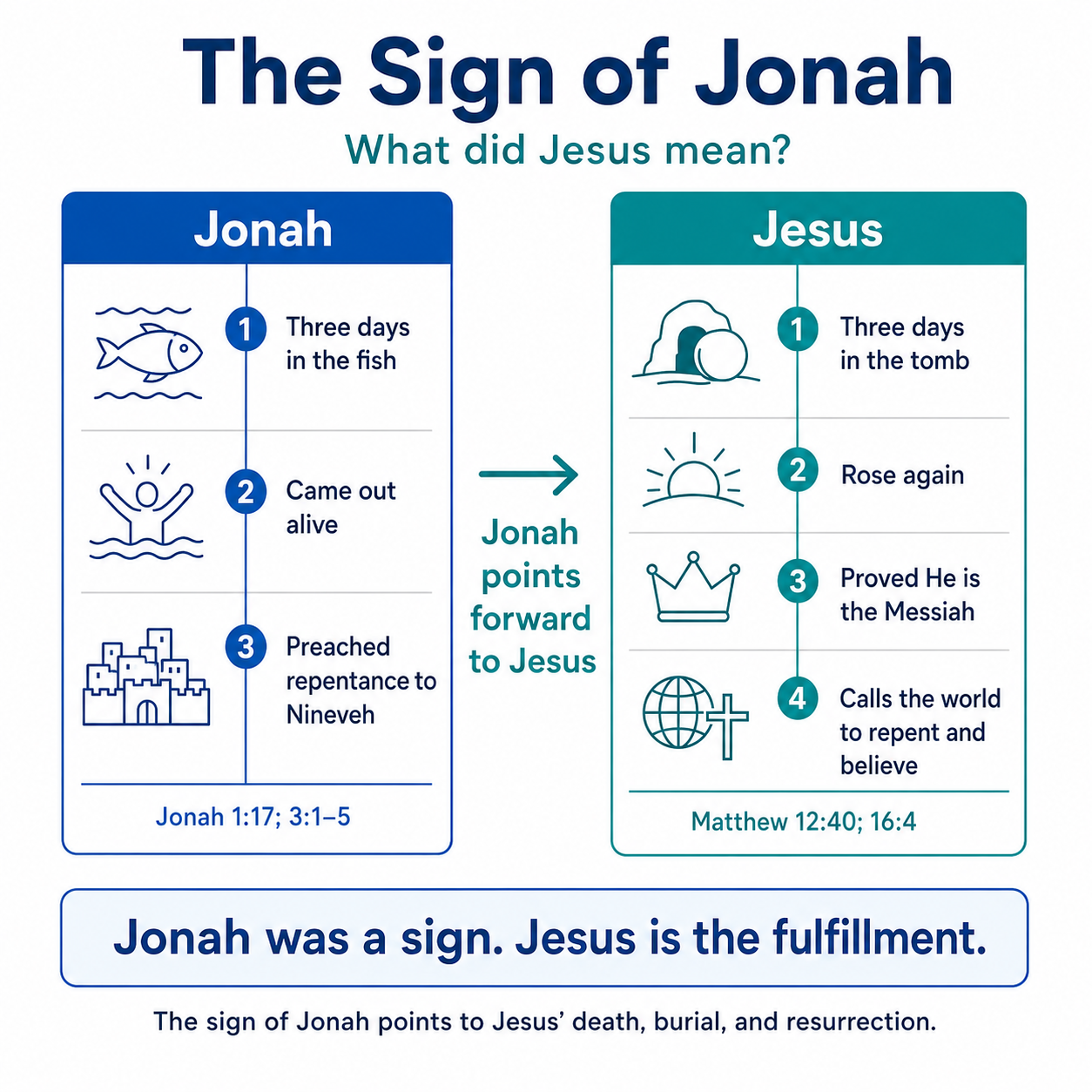
The answer begins in the Old Testament. Jonah was called by God to preach repentance to the city of Nineveh. Instead of obeying, Jonah fled in the opposite direction. During his escape, he was thrown into the sea and swallowed by a great fish, where he remained for three days and three nights.
When Jonah emerged alive, he went to Nineveh and proclaimed God’s warning. The people believed God, repented, and were spared from judgment.
Jesus said this event pointed directly to Him. Jonah’s experience was never the ultimate sign. It was a foreshadowing. Jesus Himself would become the greater Jonah.
The Resurrection Is the Sign
Jesus explained the meaning more clearly in Matthew 12:40:
“For as Jonah was three days and three nights in the belly of a huge fish, so the Son of Man will be three days and three nights in the heart of the earth.” — Matthew 12:40 (NIV)
Jonah disappeared into the depths and came out alive. In a greater way, Jesus would be crucified, buried, and raised from the dead on the third day.
That resurrection became the greatest evidence that Jesus truly is the promised Messiah and the Son of God. The religious leaders were asking for another miracle, but Jesus pointed them to the miracle that would settle the question forever.
More Than a Miracle
The sign of Jonah is about more than surviving death. Jonah came out of the fish and called one city to repentance. Jesus rose from the grave and calls the whole world to repentance and faith.
The people of Nineveh responded to the preaching of one reluctant prophet. Many in Jesus’ own generation rejected Someone far greater than Jonah, even though He stood right in front of them.
Why Did Jesus Call Them a Wicked and Adulterous Generation?
Jesus was not mainly speaking about physical adultery. In the Old Testament, God often described Israel’s unfaithfulness as spiritual adultery. The people wanted God’s blessings, but their hearts were far from Him.
The religious leaders were asking for proof, but the problem was not a lack of evidence. The problem was their unwillingness to believe.
People who sincerely seek truth usually recognize evidence when it is placed before them. People determined not to believe often keep asking for “just one more sign.” Jesus knew that another miracle would not change hearts that had already rejected the truth standing before them.
What Does the Sign of Jonah Mean for Us Today?
Many people still ask God for signs before they are willing to trust Him. They may say, “If God would just show me,” or “If He would just perform one miracle, then I would believe.”
But Jesus points us to the same answer He gave then: look to the empty tomb.
Christian faith ultimately rests on the resurrection of Jesus Christ. If Jesus truly rose from the dead, then His teachings carry divine authority, His sacrifice provides forgiveness of sins, and His promise of eternal life can be trusted.
The sign has already been given. The question is no longer whether God has provided enough evidence. The question is how we will respond to the evidence He has already provided.
Final Reflection
The sign of Jonah was never simply about a prophet and a great fish. It was about Jesus.
Jonah went down into the depths and returned alive. Jesus entered death itself and conquered it forever.
Jonah preached repentance to one city. Jesus offers salvation to every nation.
The greatest sign God has ever given the world is not another miracle waiting to happen. It is the risen Christ. Because the tomb is empty, hope is alive.